Showing posts with label Iran. Show all posts

Wednesday, February 22, 2012

Nobody Believes Iran Crazy or Israel Existentially Threatened


An excellent and concise piece by Michael Young in the National, covering all angles of the debate surrounding Iran and Israel's push for a strike.  Below is the article in full:
A procession of American officials has been visiting Israel lately, to persuade the government of Prime Minister Benjamin Netanyahu not to bomb Iran before international sanctions have had time to take hold. The arguments against an operation are familiar, but they also speak to an underlying malaise in how the world views Israel. 

By striking Iranian nuclear facilities, Israel could provoke dire consequences. Iran would be likely to retaliate, perhaps with missiles, while instructing Hizbollah to fire rockets into Israel from Lebanon. Conceivably, Syria would get involved, if only to neutralise protests against the Assad regime. Iran could block the Strait of Hormuz for a time, pushing oil prices up and harming fragile western economies. 

This catalogue of horrors is not improbable, despite reported Israeli assessments that Iran and Hizbollah might not react in spectacular ways. True, none of the parties relishes the prospect of war. Iran's regime is wary that if the Americans were to enter the fray, they might destroy Iranian military infrastructure. Hizbollah gains little by turning its Shiite supporters once again into Tehran's cannon-fodder. As for Syria, a devastating Israeli riposte against its army could actually be the straw that breaks the Assads' back. 

Several negative outcomes could ensue for Israel as well. Not only might the country find itself in a war on several fronts; if it were to drag a reluctant Obama administration into a regional conflagration that it does not want, this could severely strain an already uneasy relationship with the United States. That's because the backlash of higher oil prices could plausibly lose Mr Obama his re-election, while undermining shaky financial recoveries globally. 

But once initiated, a war could lead to this worst-case scenario. That is why few countries are willing to risk paying an onerous price for Israel's security. Even less so when the chances are that the Israelis can, at best, delay Iran's nuclear programme and unify a self-destructively divided leadership in Tehran. 

This tells us something more profound. Whether the Netanyahu government likes it or not, its uncompromising behaviour in negotiations with the Palestinians in recent years has lost Israel much goodwill internationally. Notwithstanding the ineffectiveness of the Palestinians, themselves split between Fatah and Hamas, Mr Netanyahu has never been able to live down his refusal to indefinitely suspend settlement construction in the West Bank. 

Israel's prime minister outmanoeuvred Mr Obama on peace negotiations last year, but to what end? Never has Israeli policy seemed so futile. The country evidently cannot make even minimal concessions to facilitate peace. It hasn't a clue about what to do with the millions of Palestinians whose destiny it controls directly or indirectly. Israel's own Arab citizens are increasingly alienated. The country is moving rightward. And Mr Netanyahu's government has had deep misgivings about the Arab uprisings, implicitly affirming that Israel feels secure only in the presence of Arab dictatorships. 

Israeli leaders are agitated because so few governments accept that Iran poses an existential menace to Israel. If Iran were to build nuclear weapons, this would generate considerable regional instability. An arms race would ensue. A reinvigorated, nuclear Iran, especially one that is isolated internationally and insecure at home, might seek out foreign quarrels to bolster its domestic cohesion. But would such a country threaten Israel existentially? Not when Israel can obliterate Iran several times over. 

A decision has not yet been taken in Washington on what happens if the latest sanctions on Iran fail to halt its nuclear programme. But the unprecedented force of the sanctions shows how little the Americans want a clash. And that reluctance makes me legitimately wonder whether the US would not, in the end, prefer to contain a nuclear Iran rather than endorse precarious military action that could expand into a regional war and aggravate the world economy in the process. 

When the chairman of the US joint chiefs of staff, General Martin Dempsey, described Iran as a "rational actor" last weekend while in Israel, he was saying something else: that he did not buy the contention that Iran would beyond doubt employ nuclear weapons against Israel on the basis of the Islamic Republic's religious ideology. That may be obvious to many, but purported Iranian irrationality, a product of the regime's Islamic messianism, has been at the heart of the rationale for why the "the mullahs must not get the bomb". 

If the Iranians are rational, then presumably they are as receptive to the principles of deterrence as anybody else. The United States and the Soviet Union embraced deterrence for four decades during the Cold War. Israel can do the same, many in Washington believe, not least when it holds a decisive military edge over Iran and will benefit from an American nuclear umbrella as further consolation. 

US Secretary of State Hillary Clinton irritated the Israelis in July 2009 when she declared that the US would extend a "defensive umbrella" over the Gulf if Iran acquired nuclear weapons. The phrase implied that the US could live with that eventuality, as it has in India, Pakistan and North Korea. Ms Clinton backtracked, but that seemed more a tactical than a strategic retreat. Mr Obama hasn't issued a final word on Iran, but he apparently does not regard preservation of Israel's nuclear monopoly in the Middle East as a vital American aim. 

 Israel may yet strike Iran, but at its own peril if Washington disapproves. This makes an assault far less likely, Israeli bluster aside. Mr Netanyahu has simply failed to convince anybody that Israel makes a believable victim. Not with him in charge anyway.

Saturday, May 21, 2011

U.S. Court Filing: Iran helped Al Qaeda Plan 9/11 Attacks


The New York Times reports:
Two defectors from Iran’s intelligence service have testified that Iranian officials had “foreknowledge of the 9/11 attacks,” according to a court filing Thursday in a federal lawsuit in Manhattan that seeks damages for Iran’s “direct support for, and sponsorship of, the most deadly act of terrorism in American history.”

Imad Mugniyah, the Hezbollah leader killed in 2008, also was accused of a role in 9/11.

One of the defectors also claimed that Iran was involved in planning the attacks, the filing said. The defectors’ identities and testimony were not revealed in the filing but were being submitted to a judge under seal, said lawyers who brought the original suit against Iran on behalf of families of dozens of 9/11 victims.
...
The suit contends that Iran and Hezbollah, the Lebanese militant organization with close ties to Tehran, helped Al Qaeda in planning the attacks on Sept. 11, 2001, and in facilitating the hijackers’ training and travel. After the attacks, the suit contends, Iran and Hezbollah helped Qaeda operatives escape, providing some with a safe haven in Iran.
...
In their court papers, the lawyers assert that Imad Mugniyah, as the military chief of Hezbollah, was a terrorist agent for Iran, and that he traveled to Saudi Arabia in 2000 to help with preparations for the 9/11 attacks.
...
The 9/11 commission report said there was “strong evidence that Iran facilitated the transit of Al Qaeda members into and out of Afghanistan before 9/11, and that some of these were future 9/11 hijackers.” The report also said there was circumstantial evidence that senior Hezbollah operatives were closely tracking the travel of some of the hijackers into Iran in November 2000.

But the commission said that it had “found no evidence that Iran or Hezbollah was aware of the planning for what later became the 9/11 attack,” and that the “topic requires further investigation by the U.S. government.”

Thomas E. Mellon Jr., a lawyer for the families, said the suit, first brought in Washington in 2002 and later moved to Manhattan, sought to do that investigation.
...
The lawyers’ filing included reports of 10 specialists on Iran and terrorism, including former 9/11 commission staff members and ex-C.I.A. officers. “These experts make it clear that 9/11 depended upon Iranian assistance to Al Qaeda in acquiring clean passports and visas to enter the United States,” Mr. Mellon said.

But the expert reports do not in most cases seem to go as far as the defectors in contending Iran had foreknowledge of the attacks.

The filing says the defectors worked in Iran’s Ministry of Information and Security “in positions that gave them access to sensitive information regarding Iran’s state sponsorship of terrorism.” It says they have reason to fear for the safety of themselves and their families “should their identities and the content of their testimony be revealed publicly.”

Sunday, May 1, 2011

Ahmadinejad Loses Key Fight in Iran

In this picture taken on March 8, 2011, Iranian Intelligence Minister Heidar Moslehi, takes off his glasses in an undisclosed location, in Tehran, Iran. Iran's parliament is telling President Mahmoud Ahmadinejad to obey an order from the country's supreme leader to reinstate Iran's intelligence minister. The statement from lawmakers deepens the high-level political battle over Heidar Moslehi, who resigned Sunday over an apparent rift with Ahmadinejad. But Supreme Leader Ayatollah Ali Khamenei quickly ordered Moslehi to remain (AP Photo via Daylife).

It looks like Ahmadinejad has lost a key fight within the complicated internal politics of Iran's autocratic theocracy. The Washington Post reports:
Iran’s spy chief took his seat at a planned Cabinet meeting in Tehran and waited with the other ministers for Mahmoud Ahmadinejad. The embittered president never showed up.

It was all another bit of political theater last week amid Iran’s current — and deeply complex — power plays between the increasing confident Intelligence Minister Heidar Moslehi and the suddenly defensive Ahmadinejad, who refuses to accept Moslehi and has boycotted Cabinet sessions despite an order from the country’s highest authority.

Political dustups are nothing new to Iran, where parliament bickers regularly and Ahmadinejad and the ruling clerics have traded tense moments. But few can match this one for its raw nerve and serious stakes, which reach into the highest levels of how Iran is ruled.
...
Ahmadinejad could hardly have picked a more potent adversary than Moslehi, who was restored to the powerful intel post by Khamenei just hours after resigning April 17 apparently under pressure from Ahmadinejad.

The embarrassing slap has invited speculation that Khamenei’s once-blanket support for Ahmadinejad — particularly in the critical months of chaos after his disputed re-election in 2009 — could be now fraying by his repeated attempts to push the limits of his powers.

It also shows the importance the ruling clerics place in the intelligence minister, who is deeply involved in both Iran’s international policies and its domestic spy networks that are pillars of the regime’s control.

A serious fall from Khamenei’s favor would undoubtedly leave Ahmadinejad’s clout diminished as a lameduck leader and test the loyalty of his main supporters, including the Revolutionary Guard that will have a central role in picking the candidates for his successor in 2013.

Ahmadinejad’s opponents, meanwhile, have seized the moment. A group of lawmakers has revived a petition drive for Ahmadinejad to be called before the chamber for questioning, giving his critics room to raise the extremely unlikely — but still headline snagging — scenario of impeachment.
...
On Friday, a hard-line cleric used his nationally broadcast sermon to indirectly warn Ahmadinejad that he would be moving into dangerous territory by escalating his challenges to Khamenei.

“Obedience to the supreme leader is a religious obligation as well as a legal obligation, without any doubt,” said Ayatollah Ahmad Khatami. He did not mention Ahmadinejad by name, but it was clear he was referring to the president.

Last week, Khamenei even made a rare public rebuke to Ahmadinejad, saying he will not hesitate to intervene in government affairs whenever necessary.
...
Iran’s top Arab ally, Syrian President Bashar Assad, is struggling to quell a growing revolt that threatens his regime. In the Gulf, Iran’s standing has taken sharp blows after Sunni leaders accused Tehran of backing Shiite uprisings in Bahrain and elsewhere. Bahrain’s main business group called Saturday for a boycott of Iranian goods.

At the same time, Ahmadinejad is backed into a dispute he cannot be expected to win.

He accepted Moslehi’s resignation after apparent disputes over decisions by Moslehi — the only Islamic cleric in the Cabinet — to dismiss close Ahmadinejad allies in the ministry.

But Moslehi appears to have a direct pipeline to Khamenei, who has the final word on all matters of state.
...
Khamenei has repeatedly praised the 54-year-old Moslehi, who previously served as Khamenei’s representative to the Revolutionary Guard’s vast civilian network, known as Basiji, that serves as the ruling system’s proxy in nearly every neighborhood around the country. When Moslehi was appointed to the intelligence post in 2009 — as part of political shake-ups after the postelection protests — he told parliament that the ministry’s work would “bring a smile” to the supreme leader.

In March, Moslehi relayed a message from Khamenei to the ministry staff that they should not pay attention to “political trends or individuals” but instead work under the direction of the supreme leader. This was widely interpreted as an endorsement of proposals to make the intelligence services a special organization directly under the supreme leader — the same status as the Revolutionary Guard.

For years, Ahmadinejad has counted on the Guard as the bedrock of his support. But even that could be showing some stress fractures.

The day after Khamenei’s intervention to save Moslehi, the Guard-run newspaper Javan slammed Ahmadinejad and his close aides. It suggested that “unsavory elements” aligned with Ahmadinejad sought to use the intelligence ministry for political gain — an apparent reference to efforts at undermining political rivals for next year’s parliamentary elections and the 2013 presidential race.

Then the Bakeri Online website linked to Ahmadinejad fired back, claiming that Moslehi wanted to sell out the ministry to the Revolutionary Guard.

“It’s getting very complicated for Ahmadinejad now,” said Alfaraj. “He sought to make Moslehi a scapegoat. He feels he has to stick to it. He’s pushed himself into a very tight corner.”

Wednesday, September 8, 2010

Lebanese Banks Comply with Iran Sanctions

From Bloomberg:
Lebanese banks will have to comply with stricter sanctions by the United Nations, the U.S. and the European Union on Iran, Central Bank Governor Riad Salameh said.

"It is up to the Lebanese banks to act in accordance with their interests and be sure, if they have to make an operation, that it's an operation that can't be contested internationally," Salameh said in an interview late yesterday at his office in Beirut. The latest UN resolution "is very clear and we will respect it and make sure it is respected."
...
Stuart Levey, the U.S. Treasury undersecretary for terrorism and financial intelligence, visited Lebanon last month and met with Salameh as well as Finance Minister Raya Haffar el- Hassan for talks on sanctions against Iran. Salameh declined to provide details of the meeting.

Blom Bank SAL, Bank Audi SAL-Audi Saradar Group and Byblos Bank SAL, which are all among Lebanon’s top ten banks by assets, don’t allow transfers to Iran. There are 52 commercial banks operating in the country.

International Law

Lebanese banks are "also aware of the fact there is a list of people and institutions that the United States or the European Union have designated as parties not to deal with," Salameh said. "It's their responsibility therefore to act in a way that is in accordance with international law."

He said Lebanese banks have advised the central bank that they will abide by the sanctions and that "historically there was very a small level of an operation for Iran, or Iranian companies or merchants through Lebanese banks."

Bank Saderat, one of Iran’s largest lenders, which has six branches in Lebanon, will also have to comply with UN sanctions in accordance with Lebanese banking regulations, Salameh said.

The bank, which has been operating in Lebanon since 1963, has been under U.S. sanctions since 2006. In July, Germany’s financial regulator froze the assets of Bank Saderat’s Frankfurt and Hamburg units after the EU added the lender to a list of Iranian companies subject to "restrictive measures."
...

Friday, September 3, 2010

Syria's Allies Take Their Allotted Places

Michael Young's Thursday editorial echoes some of the sentiments expressed in my last post while elaborating on the Hizballah-Ahbash clash in Beirut and the Syrian-Iranian maneuvering over Lebanon:
...
It is ironic that Berri’s stalwart defense of the Lebanese state and its sovereignty should only serve to strengthen the hand of Syria in the struggle over Lebanon’s future, the same Syria that ravaged both the state and its sovereignty during its 29-year military presence.

In that light, it appears increasingly clear that the Burj Abi Haidar incident last week was less a Hizbullah signal directed at Damascus that it would not bend in the face of Syrian pressures, than a message from Syria to Hizbullah. As the fighting began, there was military mobilization in Sunni neighborhoods around Burj Abi Haidar, with Syria’s allies there bringing out their weapons. Hizbullah was reportedly bewildered by the sudden proliferation of armed groups lining up against the party, even as its units were being bussed into the area where the clashes were occurring. Hizbullah not only had to swallow the killing of two officials, it was unable, or not allowed, to enter the perimeter around the Ahbash mosque in Burj Abi Haidar.

Syria’s President Bashar Assad tends to work from the same template as his father when it comes to Lebanon. In 1985-86, Hafez Assad engineered a return of Syrian soldiers to western Beirut, from where they had been compelled to withdraw by the Israelis in 1982. Assad managed this by allowing pro-Syrian militias in that part of the city, principally Jumblatt’s Progressive Socialist Party and Berri’s Amal movement, to go at each other with vicious abandon. Western Beirut effectively reverted to a state of nature, until the Sunni elite asked Assad for help. He was glad to oblige, and in 1985 he deployed intelligence agents in the capital, and a year later his army returned.

It was lost on no one what Wi’am Wahhab announced after the Burj Abi Haidar incident. Wahhab’s sole reason for existing, evidently, is to issue statements clarifying the Syrian mindset, or at least that of the intelligence agencies, and he warned that Syria would intervene using all possible means to prevent a Sunni-Shiite conflict in Lebanon. Not surprisingly, Berri and Jumblatt simultaneously played up the sectarian nature of the Burj Abi Haidar incident, at a moment when Hizbullah was busily trying to portray it as a personal quarrel.

It would be too simplistic to suggest that the Syrians provoked the Hizbullah-Ahbash confrontation in order to bring their army back to Lebanon. Bashar Assad would like to do so, because only a military presence allows him to truly control the country and regain the Lebanese card regionally. However, such a process requires time, careful preparation regionally and internationally, and patience. For now the Syrians are focusing on gaining leverage against Hizbullah, which holds the political and military initiative in the country.
...
It is interesting that Hariri should have raised the issue of demilitarizing the capital. ... Demilitarization of the capital is Hariri’s indirect way of indicating that he will support Hizbullah as a resistance force in south Lebanon, but not the party’s takeover of the rest of the country. The Syrians probably agree with this, because ultimately their objective is to use Hizbullah in the south, too, while they themselves take over the rest of the country. However, by making Hariri play down his demilitarization demand, Assad was plainly suggesting that Syria alone is entitled to raise that matter.
...
Related Posts:

Thursday, September 2, 2010

Proxy Country

Arguments as to the breaking away of Syria from Iran are generally rife with logical land-mines, fantastic delusions, and faulty readings of historical events, trends and agreements between the two ruling regimes in those countries over the past thirty years.

In Lebanon, however, a narrow fissure of divergence between the interests of the two autocratic states has been exposed through the violent clashes between the Iranian-backed Hizballah and Syrian-backed Ahbash groups that occurred on August 24th in the Burj Abi Haidar neighborhood of the Lebanese capital, Beirut.  Over the past several months Michael Young has done an excellent job of chronicling this divergence, as well as the myriad of Lebanese politicians that have had to perform a series of political acrobatics to accommodate the contesting factions.  A recent subject of Young's discerning analysis was Walid Jumblatt (who today visited the Syrian ambassador to Lebanon, a day after having visited the Iranian ambassador - walk that tight rope Walid Beik).

Interesting/Entertaining/Illuminating/(Humiliating?) as Walid Beik's acrobatics have been, there is another politician whose attempts at balancing amid the turbulent waves of this intra-axis-of-terror (pardon the term) friction have most recently provided a source of illumination on the darker undercurrents of events shaking the country.

As the holder of the Shiite community's highest position within the Lebanese state, Nabih Berri is, for better or worse (mostly worse), the irrefutable representative and primary agent of that community's post-Taef participation in the Lebanese state.  As a leading ally supplicant of the Syrian regime in the country, the Speaker of Parliament was instrumental in implementing that regime's attempted derailing of the establishment.  Framed thus, the Speaker's recent rejection of the characterization of Lebanese Shiites as 'rebels' can only be aimed at Hizballah, an entity which continues to attempt to define itself as the definitive representative of that community while in itself operating completely outside the purview of the state. 

Consider also the fact that even as the bullets and RPGs continued to fly through the streets of the Burj Abi Haidar neighborhood (and Basta, and Nabaa, etc...) Berri was quick to distance himself from Hizballah.  The clashes came after the announcement of Iranian president, Mahmoud Ahmadinejad's upcoming visit to Lebanon.  That visit will come in the wake of the joint Saudi-Syrian summit that took place in the country only one month ago, and in which Hizballah neither hosted nor was received by either of the two visiting foreign dignitaries - instead, the group had to contend with being relayed second-hand information by Berri.  Contrast this with the image of Hassan Nasrallah walking in stride with Bashar al Assad and Mahmoud Ahmadinejad in Damascus.  As Tony Badran accurately predicted, Hizballah's primary answer to the Saudi-Syrian summit, which was ostensibly aimed at tempering the increasingly threatening war-drums sounded by Hizballah over the Special Tribunal for Lebanon, was found in violence in the South - the message was loud an clear: we still control events on the ground.  Perhaps, this time ahead of a visit and not after, the Burj Abi Haidar clash was Syria's response.

In the broad picture of things, Syria is and will, of course, remain a staunch ally of the Iranian mullah-regime.  At the same time, it will, of course, seek a military return to Lebanon, one in which it, and not Iran (through Hizballah) will be the primary agent of influence.  Towards that end, the regime in Syria will continue to seek out and exploit triggers to chaos, instability or war in Lebanon.  That the primary trigger for now is an increasingly well-armed militia made further neurotic by a delayed  tribunal and with a nuclear time-bomb ticking overhead should be no surprise.  The message is all too clear, in Lebanon it is us or the deluge.

Related Posts:

Sunday, August 29, 2010

Syria's Message: Us or Hizballah

Lebanese mourners walk past a portrait of the late founder of the Islamic republic in Iran, Ayatollah Ruhollah Khomeini, during the funeral of Hezbollah member Mohammed Fawaz in the village of Tibnin in southern Lebanon on August 26, 2010, two days after he and two other Lebanese men were killed in clashes in Beirut's Burj Abi Haidar district, between two pro-Syrian movements, the Shiite Muslim Hezbollah and the Sunni Muslim al-Ahbash group. (Getty Images via Daylife)

Hanin Ghaddar comments on the recent Hizballah-Ahbash clash in the Abi Haidar neighborhood of Beirut.  As always, the article is worth reading in full, excerpts below:
...
Thus, the clashes must be seen as a message from Syria to Hezbollah that Damascus is back and that the Party of God no longer single-handedly controls the political scene in Lebanon. It is also worth mentioning that this happened immediately after Iranian President Mahmoud Ahmadinejad declared that he would visit Lebanon on September 11 and 12.

Using a Sunni militia to deliver the message is interesting, as Syria might also be sending another message to the Saudis and Prime Minister Saad Hariri that it can protect the Lebanese Sunnis. As for the international community, Syria was clearly telling it that it can hurt Hezbollah, and that it should be given back Lebanon as a reward.

... The Lebanese in general and the Sunnis in particular are being given two options: Hezbollah’s control or the return of Syrian hegemony. This means that the Lebanese have to pay for the Syrian-Iranian alliance and for when this alliance weakens.

... The day after the clashes, Al-Ahbash officials went to Damascus to meet senior Syrian general and former head of Syrian intelligence in Lebanon Rustum Ghazali, a clear indication that Syria sponsors and controls Al-Ahbash. Of course, this does not mean that Syria and Iran are no longer allies. When Imad Mugniyah was assassinated in Damascus, ... many laid the blame on the Syrian regime, claiming Mugniyah had been killed to sever the tie linking Hezbollah to the Hariri assassination.
...
Related Posts:

Thursday, August 26, 2010

Iran and Syria: Lebanon Tug of War

 
People check damages to their shops a day after street gun battles in Beirut's residential area of Bourj Abu Haidar, Lebanon, Wednesday, Aug. 25, 2010.(AP Photo via Day Life)

Michael Young spells it out in an editorial for the Daily Star, extensive quoting below:
You had to agree with the pro-Hizbullah daily Al-Akhbar when it observed in its Wednesday edition that one could only “naively” assume that the Burj Abi Haidar fighting the previous evening was the result of a personal dispute between supporters of Hizbullah and the Society of Islamic Philanthropic Projects, known as the Ahbash.

... most media outlets agreed that tension had been brewing in the neighborhood for some time. The Ahbash are close to Syria, not to say the Syrian intelligence services, which has long employed the group as a counterweight to Sunni militant groups the Syrian regime considers threatening, above all the Muslim Brotherhood. In the postwar period, the Syrians used the Ahbash against the Hariri family – indeed Ahbash members were suspected of involvement in the assassination of the former prime minister, Rafik Hariri – and to undercut the authority of the mufti and the Sunni religious establishment.

... Here was, perhaps, the first armed confrontation between Iran and Syria in Lebanon, through proxies, to determine who will dominate the country in the future. More specifically, the Syrians, in endeavoring to revive their hegemony, have entered into a struggle for power with the only force that can stand up to them locally, Hizbullah, on which Damascus seeks to impose its priorities. Not surprisingly, Hizbullah has refused to surrender the political gains it accumulated during the past five years – gains, above all, in the service of Iran.

The heart of the problem is the Special Tribunal for Lebanon. A decision is expected from the institution in the coming months – whether indictments or the identification of suspects. Hizbullah feels it will be targeted by such a step and has raised the heat on the government of Prime Minister Saad Hariri to immediately end Lebanon’s cooperation with the tribunal. Hariri has refused, and can afford to buy time. That’s because Hariri knows that Syria intends to use any tribunal decision as leverage over Hizbullah, to push the party to surrender to Damascus key posts it controls in the public administration and the security and military apparatus.

In light of this, Syria, like Hariri, is waiting for the tribunal to come out with something first, before opening negotiations with Hizbullah; while Hizbullah’s secretary general, Sayyed Hassan Nasrallah, keen to avoid any such bargaining, is out to create an intolerable situation on the ground so that Hariri is left with no choice but to scuttle the tribunal before its findings push the party into a corner.

Initially, Hizbullah felt that it had a range of options to intimidate Hariri. Party spokesmen ominously mentioned a return to May 2008, when Hizbullah and Amal overran western Beirut militarily and forced the government of Fouad Siniora to annul two decisions that the party regarded as threatening. Hizbullah officials also raised the possibility of bringing down the current government. However, at a summit in Beirut several weeks ago, President Michel Sleiman, King Abdullah of Saudi Arabia, and President Bashar Assad of Syria signed on to a statement that effectively ruled out both measures.
...
What will be interesting to watch in the coming weeks is what happens on the margins of the Syrian-Iranian struggle over Lebanon. The Parliament speaker, Nabih Berri, whose allegiances are with Syria, must yet be very careful of how he manages his relationship with Hizbullah. It was indicative of Berri’s dilemma that during the Burj Abi Haidar incident Amal issued a statement saying it was not involved, even as some of its men fought on Hizbullah’s side.

Walid Jumblatt is another politician who must play the Syria-Hizbullah rivalry very carefully. He has been especially vocal recently in calling for the tribunal to be abandoned. That’s because it only exacerbates the tensions between Damascus and Hizbullah, and Jumblatt and his community happen to be caught in the middle. The Druze leader has been the target of repeated condemnation in Al-Akhbar lately, principally because Hizbullah views him as particularly vulnerable (which Jumblatt is), and wants to keep him in line.

...What divides Syria and Iran is power, which is something neither is presently inclined to share in Beirut. Even if Hizbullah and Syria avoid episodes like the one on Tuesday, there will be other outbursts of violence or political altercations as the tribunal nears the time when it takes some sort of action.

Particularly revealing is the extent to which Hizbullah feels confident that it can out-maneuver Syria in Lebanon. Damascus was never very good at anchoring itself among the Lebanese without its army and intelligence services around to enforce its dictates. Ironically, Hizbullah has become the principle bulwark resisting a Syrian comeback, because the party wants to preserve Lebanon for Iran. What abysmal choices we Lebanese are left with.
 Related Posts:

Hizballah-Ahbash Clash in Beirut


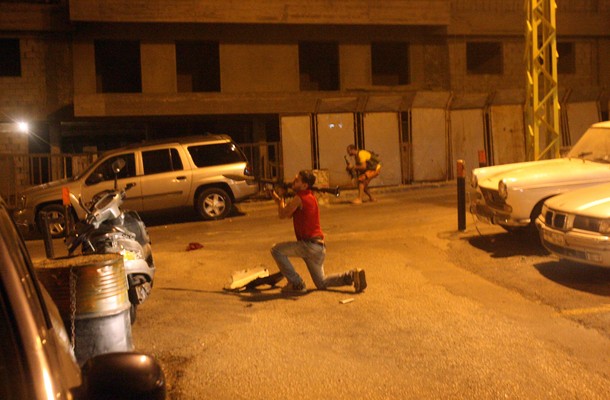
Hizballah fighters clashed with Ahbash (a Syrian-backed Sunni organization) fighters in the Abi Haidar neighborhood of Beirut on the night of August 24th, 2010, leaving one Hizballah official (Mohammad Fawaz, the Hizballah director for the neighborhood) and his bodyguard dead.  A 19 year old Kurdish resident of the neighborhood (described as an Ahbash fighter) along with another bystander were also killed (reportedly in a nearby neighborhood which got caught up in the fighting).  NOWLebanon has a good on the ground piece on the finding.

Meanwhile, speculation abounds as to the "significance" of the clash given the Ahbash's unilateral and superseding loyalty to the Syrian regime - and, of course, Hizballah's to Iran - and the feverish fervor and eagerness to fight displayed by both parties.

The clash comes in light of intense speculation and popular apprehension of upcoming Special Tribunal for Lebanon indictments rumored to be issued in December.  In recent weeks Hizballah has aggressively maneuvered to cast doubt on the Tribunal and the investigation into the Hariri assassination (as well as those that followed) and paint it as an international conspiracy contrived against the Iranian-outfitted group. 

Some images of the gunfight (via DayLife) and its after effects below:
Above: A Lebanese gunman takes position along Burj Abi Haidar Street in Beirut, late on August 24, 2010, during clashes between the Shiite movement Hezbollah and a Sunni Muslim group al-Ahbash (Getty Images). Second: Lebanon's Hezbollah gunmen walk at Burj Abi Haidar street in Beirut during clashes (Reuters Pictures).Third: Lebanese civil defense workers carry an injured man that was hit in the clashes that erupted (AP Photo). Bottom: Lebanese people flee the area of clashes in Beirut's Burj Abi Haidar neighbourhood on August 24, 2010 (Getty Images).

Wednesday, August 18, 2010

Hassan Fadlallah: R.I.P.

This is a bit delayed ... but below you'll find links to two of the better articles on Fadlallah I've found, looking at his past and commemorating his passing:

Tuesday, July 13, 2010

Hizballah: Enemy of the State

Tony Badran writes what is perhaps the most lucid interpretation and analysis of Hizballah's operational philosophy, in Lebanon and as an extension of Iran's regional policy. This piece should be read in full, below are some excerpts:
The recent tension in South Lebanon, choreographed by Hezbollah against UNIFIL under the guise of spontaneous protests by villagers, has been used by the party to reassert its equation of “the Resistance, the people, and the army”— the three mutually-reinforcing pillars which, Hezbollah maintains, are alone responsible for safeguarding the country’s security. The core premise of this mantra, however, has its origins in Iran’s Islamic revolutionary doctrine.
...
The absence of any reference to the “state” in this formula, and its substitution with the category of “people” is not accidental. ...
...
Dissociating the peoples from their governments in the Arab world was and remains a vital aim of the Iranian revolutionary regime. ...
...
That is the essence of Hezbollah’s formula. Much like the Iranian Revolutionary Guard Corps (IRGC), Hezbollah operates in a parallel universe; it forms a parallel military and presides over a parallel society, which “coordinate” with the armed forces and interact with the state only in order to neutralize the state’s ability to challenge the party’s autonomous, parallel existence. All of which of course makes a mockery of those in the West advocating dialogue with Hezbollah to encourage its further “integration” into the “political mainstream.”

As party official Mahmoud Qomati explained in 2009, Hezbollah seeks to integrate the state into “the axis of the army, the people, and the Resistance.” This of course merely echoed a central theme in the thinking of Hezbollah, articulated by the party’s deputy secretary general, Naim Qassem, in a June 2007 article in An-Nahar revealingly titled “How Does the Rest of Society Integrate into the Resistance?”
...

Tuesday, June 8, 2010

Sound Familiar?

Kurdistan Worker's Party (PKK) rebels stop a car at a security checkpoint in the Qandil mountains in 2009. Iranian troops have crossed into Iraq twice in three days amid clashes with Kurdish rebels in the Qandil mountains near the border, a security spokesman said Saturday (AFP via Yahoo!News)


From YaLibnan:
...
Iranian troops have been shelling the region for at least 12 days in pursuit of Kurdish rebels, according to Lt. Saleh Ahmed of the Kurdish security forces. He said Iranian artillery killed a 14-year-old girl and wounded three villagers on May 30. Iranian troops with artillery and tanks crossed the Iraqi border last Thursday and began building an outpost and a road leading back into the Iranian side of the border, he said.
...
Impunity for international borders, the use of disproportionate force in the pursuit of "terrorists", lack of respect for human life. Sounds like Iran is behaving exactly like those against whom it aims the entirety of its rhetoric.

Monday, June 7, 2010

Brazil-Iran Accord Spells Sweet Revenge?

Brazilian aircraft maker Embraer and General Electric are working with renewable fuel company Amyris to develop sugar cane-based jet fuel for airliners. They say a test flight by Brazilian airline Azul Linhas Aereas could come in early 2012. (Original post and image via WIRED)

Gal Luft has an interesting (although, perhaps, a little too ambitious in its projections) write-up  in FP magazine on the potential for Brazil to find an Iranian market, always in desperate need of refined fuels, for its ethanol bio-fuels.  Summary below:
...
Brazil is the world's largest sugar grower. This year it experienced a bumper crop, with output growing 16 percent from a year earlier. But due to a global glut, sugar prices have plunged 57 percent since February. Because sugar cane is a perishable crop that cannot be stored, the best way for Brazil to generate value from its undervalued surplus is by converting it into ethanol, of which Brazil is already the second-largest producer (after the United States) and a major consumer (for years Brazilians have driven mostly flex-fuel cars, which can run on any combination of gasoline and ethanol). The country's ethanol production is expected to rise 19 percent to 8 billion gallons this year.

For Tehran, Brazil's surplus ethanol could be a strategic savior. Iran is a major exporter of crude oil, but lacks the refinery capacity to process most of it; as a result, the second-largest oil producer in OPEC depends on other countries' exports of refined gasoline. A conference committee in the U.S. Congress is hammering out legislation that aims to exploit this weakness by imposing sanctions on foreign companies that supply refined petroleum products to Iran. Tehran has been bracing for these sanctions for a while, taking measures to address its Achilles' heel: building seven new refineries, expanding existing ones, converting cars to run on natural gas (of which Iran has the world's second-largest reserves), and securing alternative gasoline supplies from China and Venezuela.

But none of these efforts would give Iran the immediate injection of motor fuel it needs as swiftly as Brazil's ethanol. Brazil could replace most of the 5.8 million gallons of gasoline that Iran imports daily (a conventional internal-combustion car engine can handle up to 20 percent ethanol in its fuel blend without damage to the engine; in the United States most cars already run on 10 percent). Doing so would pull the teeth out of the gasoline sanctions legislation, rendering it useless before it even reaches President Barack Obama's desk.

... For years, Brazil has been clamoring to export its surplus ethanol to the United States, only to be blocked by lawmakers beholden to powerful American agricultural lobbies. If not for a prohibitive 54-cent-per-gallon import tariff on Brazilian ethanol -- not to mention a sugar quota and tariff system that restricts imports and keeps sugar prices in the United States much higher than the world price -- the fuel could have ended up in American gas tanks rather than reducing the country's leverage with Tehran.
...
The tariff on Brazilian ethanol has been a lingering source of tension between Brazil and the United States for years. Both Presidents George W. Bush and Obama, in their meetings with Lula, rejected his request to eliminate the tariff. Now Lula is taking his revenge, and it's surely a sweet one.

Thursday, June 3, 2010

Iran Can Produce Two Nuclear Warheads

This according to the IAEA's latest report.  More here from the NYTimes:
In their last report before the United Nations Security Council votes on sanctions against Iran, international nuclear inspectors declared Monday that Iran has now produced a stockpile of nuclear fuel that experts say would be enough, with further enrichment, to make two nuclear weapons.
...
When Iran tentatively agreed eight months ago to ship some of its nuclear material out of the country, the White House said the deal would temporarily deprive Iran of enough fuel to make even a single weapon.

But Iran delayed for months, and the figures contained in the inspectors’ report on Monday indicated that even if Iran now shipped the agreed-upon amount of nuclear material out of the country, it would retain enough for a single weapon, undercutting the American rationale for the deal.

The toughly worded report says that Iran has expanded work at one of its nuclear sites. It also describes, step by step, how inspectors have been denied access to a series of facilities, and how Iran has refused to answer inspectors’ questions on a variety of activities, including what the agency called the “possible existence” of “activities related to the development of a nuclear payload for a missile.”
...
The inspectors reported Monday that Iran has now produced over 5,300 pounds of low-enriched uranium, all of which would have to undergo further enrichment before it could be converted to bomb fuel.

The inspectors reported that Iran had expanded work at its sprawling Natanz site in the desert, where it is raising the level of uranium enrichment up to 20 percent — the level needed for the Tehran Research Reactor, which produces medical isotopes for cancer patients. But it is unclear why Iran is making that investment if it plans to obtain the fuel for the reactor from abroad, as it would under its new agreement with Turkey and Brazil.

Until recently, all of Iran’s uranium had been enriched to only 4 percent, the level needed to run nuclear power reactors. While increasing that to 20 percent purity does not allow Iran to build a weapon, it gets the country closer to that goal. The inspectors reported that Iran had installed a second group of centrifuges — machines that spin incredibly fast to enrich, or purify, uranium for use in bombs or reactors — which could improve its production of the 20 percent fuel.

The inspectors also noted that the agency had finally succeeded in setting up a good monitoring system for the 20 percent work after a rocky start in February, when Iran began raising the enrichment levels. “A new safeguards approach is now being implemented,” the report said.
...
Last fall, President Obama, along with the leaders of Britain and France, denounced Iran for secretly building a second enrichment plant near the city of Qum, without alerting inspectors until just before the three leaders’ countries announced they had discovered the facility. But curiously, the report suggested that now, with its existence revealed, Iran might be losing interest in it. The report said that Iran had installed no centrifuges in the half-built enrichment facility, which is located inside a mountain near a military base.

Iran has sought to locate many of its nuclear facilities in underground sites so as to lessen their vulnerability to aerial attacks. In the new report, the inspectors said that the Iranians disclosed that a new analytical laboratory planned for construction amid a warren of tunnels at Isfahan “would have the same functions as the existing” unprotected laboratory there.
Related Posts:

Monday, May 17, 2010

Iran Signs New Nuclear Deal with Turkey and Brazil

Brazilian President Luiz Inacio Lula da Silva, and Turkish Prime Minister Recep Tayyip Erdogan (R) smile as Iranian President Mahmoud Ahmadinejad (C) talks to Brazil's Foreign Minister Celso Amorim after Iran inked a nuclear fuel swap deal in Tehran on May 17, 2010 under which 1,200 kilos of low enriched uranium will be shipped to Turkey, potentially ending a standoff with world powers gearing for new sanctions against Tehran. The agreement, under which Iran will in turn receive nuclear fuel for a Tehran reactor, was signed in the Iranian capital between the foreign ministers of Iran, Turkey and Brazil. (Getty Images via Daylife)

In a move still requiring UNSC approval, Iran has signed a nuclear exchange agreement with Turkey and Brazil. The agreement allows Iran to transfer only a fraction of the amount of nuclear material originally called for by the UNSC, in return for the exchange taking place on Turkish soil. The Washington Post reports:
Iran signed a surprise deal for a nuclear fuel swap with Western nations on Monday, brokered by Brazil and Turkey. It was the first such agreement by the Islamic Republic with foreign nations since 2004.
...
The agreement announced in Tehran on Monday builds on a swap deal Iran struck in October with the "Vienna group" -- a negotiating bloc that consists of the United States, Russia and France and representatives of the International Atomic Energy Agency.
That pact fell apart after Iran insisted that any swap must take place on Iranian soil and be carried out in batches or simultaneously. The failure prompted the Obama administration to back off its policy of engagement with the Islamic Republic.

The big difference now is that Iran -- facing tougher sanctions -- has severely compromised on its demand that the swap take place within its borders. It is now prepared to send 2,640 pounds of low-enriched uranium to neighboring Turkey and to wait up to a year for the delivery of higher-enriched fuel from Russia and France.

If, for any reason, the swap fails, Iran's stockpile would be returned by Turkey, Davutoglu said.

The amount of low-enriched uranium agreed upon in the new deal, however, is significantly lower than the 70 percent of Iran's stockpile that U.S. officials have said they expect to be sent abroad.

An unnamed State Department official told Reuters news agency on Monday that 70 percent of the stockpile would equal nearly 4,400 pounds. In February, 70 percent of the stockpile was estimated at between 3,179 and 3,828 pounds.

The head of Iran's Atomic Energy Agency, Ali Akbar Salehi, in an interview said the increase was "insignificant." Iran's Foreign Ministry spokesman also stated that Iran would not stop enriching its uranium up to 20 percent, a controversial move that Iran started after the first swap proposal failed.
...
Brazilian and Turkish representatives said they hope the deal will lead to further talks focused on solving the international standoff over Iran's nuclear program. Iran is supposed to send the Vienna group a letter within one week, seeking its approval.
Update: The Economist elucidates:
...
The thinking behind the failed October deal was to take most of Iran’s stockpile of enriched uranium out of play, in order to create time for negotiations. But because Iran has carried on enriching uranium since it turned down the October deal, it has quite a lot more of the low-enriched stuff sitting around than it would send to Turkey under the new deal (some 1,100 kg according to Jacqueline Shire of the Institute for Science and International Security). Getting uranium from 20% enriched to the 90% or so needed for a bomb takes a lot less effort than getting to the original 3.5% in the first place. So even if the new deal with Brazil and Turkey sticks it is unlikely to buy Iran much time to avoid a vote on sanctions.

Word at the UN had it that a sanctions deal (a full arms embargo, financial and shipping sanctions and restrictions on the Revolutionary Guard) was near. Russia has recently joined America in sending a stronger signal that Iran must stop enrichment, as the UN Security Council has demanded, and answer the IAEA's increasingly pointed questions about activities that appear to indicate an interest in weapons development. This would have left only China in a position to veto sanctions, and China has traditionally not liked to veto alone.

The case against sanctions, in other words, seemed to be crumbling. But Turkey and Brazil might just succeed in swinging other temporary members of the Security Council against sanctions. Lebanon is already publicly sceptical, and Gabon has called for a negotiated solution. Mexico may feel caught between its important American relationship and its regional partner and rival, Brazil. Even if none of the veto-wielders bolts, the Western coalition could have to scrape for the nine votes needed, sending a weak signal.

Unless details of the new deal (a letter is to be sent to the IAEA this week) contain pleasant surprises, it appears Iran may have successfully repeated its old trick of widening divisions between the countries preparing to tighten the sanctions net around it. ...

Related Posts:

Sunday, May 16, 2010

Lula In Iran

EDITORS' NOTE: Reuters and other foreign media are subject to Iranian restrictions on leaving the office to report, film or take pictures in Tehran. Iran's Supreme Leader Ayatollah Ali Khamenei (R), Brazilian President Luiz Inacio Lula da Silva (C) and his Iranian counterpart Mahmoud Ahmadinejad attend an official meeting in Tehran May 16, 2010. (Reuters Photo via Daylife)

Related Posts:

Friday, May 14, 2010

Iran's Real Goal is the Gulf


The most immediate threat from a nuclear Iran is not the detonation of a nuclear weapon, but the clout that the possession of such a weapon would provide the Islamic Republic in it's pursuit of regional hegemony. In his latest piece for the Daily Star, Michael Young argues that Iran's real goal is to establish a permanent foothold in the Gulf through its ability to manipulate the GCC states through . Meanwhile, writing in NOWLebanon, Tony Badran provides an excellent summary of Iranian actions and incitements in Gulf countries in it's bid to become the region's dominant power.

Young's analysis is undertaken through the lens of an American foreign policy that seems, at once, enabling to the Iranian regime's agenda and destined to ultimately draw the United States into a violent confrontation with that country - an event that Iran is ensuring would be disastrous for the region.  Young (who's article deserves to be read in full) writes:
...
And let’s add one more item to the bleak mix: Washington’s listlessness actually increases the chances that it will enter into a war with Iran, which Obama has been so understandably keen to avoid.

The Arab state system may well be caught up in a phase of terminal deterioration. Most Arab regimes are old and have lost much legitimacy by consolidating their authoritarianism while offering their younger, expanding populations little in the way of consensual social contracts, useful educational opportunities, and better living conditions. Stalemate prevails, and the onetime sway of leading Arab states has devolved to non-Arab states on the region’s periphery: Turkey, Israel and Iran.

This has had negative consequences for the United States, whose political preeminence in the region rested on the old Arab order. Longstanding American allies such as Saudi Arabia, Egypt and Jordan are weaker than ever before. ...

Looking at American policy, what do we see today? For starters, we see an Iran actively challenging America in the region. This may look like hubris, but the Iranians see little that is worrisome. Take Iraq, which the US fought long and hard over and ultimately stabilized after the spectacular blunders of the immediate postwar years in 2003-2005. Today, Obama’s stubborn priority is to withdraw, effectively denying Washington the primary terrain needed to contain Iran, but also to exercise its power over Syria and to an extent Saudi Arabia.

Iraq’s election results provided an opportunity for the Obama administration. Iran’s closest allies lost ground, in contrast to the blocs led by Ayad Allawi and Nouri al-Maliki. Instead of trying to impose some compromise between the two men that could have created the basis of a more stable Sunni-Shiite order, therefore of a new strategic relationship between Washington and Baghdad, Obama did nothing. Iran saw an opening and is now helping establish a Shiite-led government that will doubtless favor Iranian interests.

... Iran has the added ability in places such as Saudi Arabia, Bahrain, and Kuwait, but also in Yemen, of being able to mobilize members of disgruntled Shiite minorities.

The impact of a Palestinian-Israeli settlement on the Gulf and Iraq, the critical playing field in the American-Iranian rivalry, would be relatively limited. The Palestinians have been a tool used by Iran, as has Lebanon, to protect its core objective: building up its supremacy in the Gulf. Iran’s priority is to progressively undermine America in the Middle East, with other regional tensions, in themselves of less immediate importance to Tehran, feeding into this. Hizbullah and Hamas act as useful shock absorbers for Iran while it develops a nuclear capability, the cornerstone of its bid for regional hegemony.
...
Badran, on the other hand, provides a cogent account of Iran's operations throughout the Gulf.  In almost every example, Hizballah - as that regime's most advanced and successful offshoot - plays a pivotal role in exporting Iranian "influence" to the region's countries.  The piece should be read in full but you'll find some quotes below:
Just as Egypt’s judiciary handed down convictions in the case of a Hezbollah cell that it uncovered, reports surfaced that an Iranian Revolutionary Guards Corps cell had also been broken up in Kuwait.

This type of Iranian action, while hardly new, is a harbinger of what’s to come once Tehran, which is seeking hegemony over the Middle East and senses an American retreat from the region, crosses the nuclear threshold. It also highlights the precariousness of any containment policy against Iran and its regional proxies.
...
The members of the [Kuwaiti] cell apparently included two stateless citizens (known as al-bidoun), a Lebanese citizen who acted as the cell’s liaison with the Iranians, as well as several military officers. One report in Al-Qabas, quoting informed sources, claimed the spy network extended to Bahrain and the United Arab Emirates – which was roundly denied by Saudi Interior Minister Prince Nayef Bin Abdul Aziz. The Kuwaitis, however, are demanding an overhaul of the Gulf Cooperation Council (GCC) security agreement (which Kuwait had previously refrained from signing) in light of “new challenges,” likely meaning the threat of Iranian security breaches.
...
While it’s unclear whether the Kuwaiti cell indeed extended to Bahrain and the UAE, Bahrain has also been subject to subversive activities in recent years. On the eve of the Gaza war of 2008-2009, the Bahraini authorities announced the arrest of a group of Shia militants who had received training in Syria, accusing them of planning terrorist attacks during Bahrain’s national day celebrations.
...
As for the UAE, it followed Kuwait’s lead by deporting foreigners, especially Lebanese Shia. Starting in summer 2009, scores of Shia were suddenly expelled. A representative of those expelled linked the deportations to being “part of a community that supports the Resistance.” What prompted these expulsions remains unclear. However, given the role of Hezbollah’s networks in Iran’s regional activities, the decision was not particularly surprising.
...
While its conventional military power is limited, Iran has engaged in such manipulation through the IRGC’s Al-Quds Force, amplifying its sway through its surrogates and through arms smuggling. The potential interplay between a nuclear Iran and its regional alliances raises serious doubts about the effectiveness of a containment strategy directed against Iran – which is, nevertheless, fast emerging as a consensus strategy in Washington. Especially unconvincing is the notion that the United States can place the burden of its containment efforts on the shaky scaffolding of the Gulf Arab states.

Iran’s objective is to replace the US as the primary power in the Middle East, and to reshape the region’s security architecture. Tehran has been pushing the GCC countries to sign a new, collective security treaty with Iran, which has presented itself as the new regional security guarantor, therefore, implicitly, the acknowledged regional hegemony. ...
...

Thursday, May 13, 2010

Are Brazil and Turkey Simply Buying Time for Iran?


On the announcement of the joint Brazilian-Turkish proposal, rumored to involve a nuclear swap along the Turkish-Iranian border, the WP writes:
Iran said Tuesday that Brazil and Turkey have offered a promising new proposal for a nuclear fuel deal as Tehran steps up a diplomatic push to stave off new U.N. sanctions over its disputed nuclear program.
...
The call for sanctions stepped up after Iran last year rejected a U.N.-backed plan that offered nuclear fuel rods to a Tehran reactor in exchange for Iran's stock of lower-level enriched uranium. The swap would have curbed Iran's capacity to make a nuclear bomb.

Under the U.N. proposal, Iran was to send 2,420 pounds (1,100 kilograms) of low-enriched uranium abroad, where it would be further enriched to 20 percent and converted into fuel rods. The rods, which are needed to power a research reactor, would then be returned to Iran. Sending its low-enriched uranium abroad would leave Iran with insufficient stocks to enrich further to weapons-grade level.

Iran, which denies any plan for making nuclear arms, has made several alternate proposals to the West, including one to swap smaller batches of Iran's low-enriched uranium.

But the U.S. and its allies say the proposals obviate the goal of rendering Iran unable to build a nuclear-powered warhead.
In addition to having rejected previous offers presented by the Security Council's five permanent members (plus Germany) in favor of counter-proposals which would have allowed it to continue working towards weapons-grade enrichment, the Iranian regime has stepped up efforts to speed up its enrichment processes, from the WP
Iran is poised to make a significant leap in its ability to enrich uranium, with more sophisticated centrifuge technology that is being assembled in secret to advance the country's nuclear efforts, according to U.S. and European intelligence officials and diplomats.
...
U.N. nuclear monitors have not been allowed to examine the new centrifuge, which Iranian officials briefly put on display at a news conference last month. But an expert group's analysis of the machine -- based on photos -- suggests that it could be up to five times as productive as the balky centrifuges Iran currently uses to enrich uranium.
...
Using its existing centrifuges, Iran has made more than two tons of low-enriched uranium, an amount that officials say could be further enriched to produce enough weapons-grade material for a single nuclear bomb, even as the government insists that its nuclear program is exclusively for energy production.
...
One of the known plants, a small, heavily fortified facility built in a mountain tunnel near the city of Qom, has been all but idle in recent months. Construction has slowed to a near halt in the weeks since the facility was publicly revealed in September, according to two Europe-based diplomats privy to intelligence reports about the site.

"They seem to have lost interest in Qom since its discovery," said the diplomat, who, like others, spoke on the condition of anonymity to discuss sensitive intelligence about Iran's nuclear program. "It makes us wonder if they're thinking about a new site."
...
Iran's largest enrichment facility, an underground complex near the city of Natanz, also appears to have stalled. Originally built to house 50,000 first-generation centrifuges known as IR1s, Natanz had only about 3,800 functioning machines when U.N. inspectors visited in late January, compared with nearly 5,000 working IR1s the previous spring.

In uranium enrichment, centrifuges spin a gasified form of uranium at supersonic speeds to create the enriched fuel used in commercial nuclear power plants, as well as in nuclear weapons.

The IR1 centrifuge used at Natanz is based on a 1950s Dutch design that Pakistani scientist Abdul Qadeer Khan stole and sold to the Iranians. The machine is prone to crashing, and it was quickly abandoned by other countries that used it.

The new machine displayed by Iran leaps ahead by at least two generations, according to diplomatic sources and nuclear experts. One diplomat said the machine on display was "probably an IR5," adding that the U.N. officials do not know how Iran developed the centrifuge or who might have provided assistance.
...
Iran has a limited amount of natural uranium, but it has produced uranium hexafluoride, the feedstock for centrifuges, to keep them running for years.

Ali Akbar Salehi, Iran's nuclear energy chief, was vague when asked during a CBS interview about new facilities. "We may start -- we probably will start -- another site this year," Salehi said. He added that Iran does not intend to notify the U.N. nuclear agency about the new construction until the facility is nearly ready for operation.

After being embarrassed publicly by revelations about the secret Qom plant, President Mahmoud Ahmadinejad boasted that Iran would soon build 10 enrichment facilities.
Commenting on possible motivations and perspectives in Turkey Sinan Ulgen writes in FP:
...
In short, Turkey shares much of the same concerns about a nuclear Iran as its partners in the West. The difference stems from the envisaged strategy for addressing the Iranian issue. Turkish policymakers want and continue to believe that a diplomatic solution is possible. Turkish Foreign Minister Ahmet Davutoglu has been in direct talks with his Iranian counterpart to seal a deal allowing the transfer of nuclear fuel to Iran. As such, Ankara is against the imposition of new sanctions on Iran. These differences are likely to lead Turkey to abstain from voting for such a U.N. Security Council resolution, now slated for early June. U.S. policymakers are known to have made clear to their Turkish counterparts that abstention will be viewed by Washington as Turkey's failure to support the new sanctions. After all, unlike other recalcitrant states like China and Brazil, Turkey is a NATO ally and benefits from the U.S nuclear umbrella; it is therefore expected to support the emerging consensus among NATO members regarding sanctions on Iran.

The growing pressure on Ankara to align itself with members of the transatlantic community is closely linked to the ineptitude of Turkish leaders, and in particular of Prime Minister Recep Tayyip Erdogan, to explain the rationale for Turkey's opposition to a new set of sanctions against Iran.

In an interview with the Guardian newspaper, the Turkish prime minister dismissed accusations that Tehran wants to develop nuclear weapons as simple rumors. Indeed, every time the nuclear issue is raised, Erdogan is quick to point his finger to Israel and its nuclear weapons so as to denounce the apparent double standard of the international community. As a result, Turkey's preference for a different strategy for dealing with Iran, involving more diplomacy and less sanctions, comes across as a provocative ideological choice, fueling fears in some quarters that Turkey is moving away from the West.
...
On arguments Turkey could present in opposition to the new round of sactions, Ulgen writes:
...
Trade and investment sanctions, as experienced in relation to Iraq, have the potential to hurt Turkey and the Turkish economy. The impact will be felt all the more in Turkish provinces near Iran, which are among the poorest in Turkey. As a neighbor of Iran, Turkey is in a different position compared with the other members of the U.N. Security Council with a bilateral trade volume in excess of $10 billion;
...
Meanwhile, also writing in FP, Paulo Sotero explores Brazilians' reactions to their president's foray into the Iranian question:
... Lula's administration has pitched the talks to Iran not as a way to come clean but as a way to prove that it is hiding nothing with its peaceful nuclear program -- and the United States and Europe are understandably skeptical. Back home, questions have arisen about the Brazilian leader's motivation for injecting himself and his country in such a daring initiative in the first place.

... As his presidential term comes to an end, Lula's move might be more about building a legacy on the world stage than much of anything else. And it may well backfire.

... Iranian President Mahmoud Ahmadinejad's visit to Brasilia last November was greeted with street protests and strong condemnation by the media and Lula's political opponents. José Serra, then São Paulo's governor and now a leading presidential candidate, criticized the president for embracing a dictator reminiscent of the military regime Lula and Serra -- themselves victims of political persecution -- fought to dislodge from power a quarter-century ago.

... The image of a smiling Brazilian minister of commerce offering the national soccer team's revered yellow jersey to Ahmadinejad in Tehran last month caused discomfort even among Lula's allies. Clovis Rossi, a columnist and early supporter of Lula's foreign policy, wrote that the Brazilian soccer jersey is now "covered with blood" from Iranian dissidents killed by the Islamic government.
...
Lula, however, remains undaunted by criticism, which he views as uninformed and undeserved attacks from those too blind to see that he is shepherding Brazil's emergence as a global power. ...

"Call us naive, but I think those who believe in everything the U.S. intelligence service says are much more naive. Look at the case of Iraq," Amorim said in an interview with the AFP. ...

Iran might have liked that rhetoric, but it's far from clear that Tehran will do much more to deliver on its "in principle" agreement for talks. The country has rejected similar deals in the recent past after welcoming them "in principle." U.S. Secretary of State Hillary Clinton dismissed Brazil and Turkey's efforts, accusing Tehran of stalling and trying to gain time instead of addressing the central question about the nature of its nuclear program at the IAEA.
...
U.S. and European officials have already signaled to their Brazilian counterparts that a Lula visit to Tehran that fails to produce results could cause major damage to Brazil's relations with its traditional allies. Fearful of this outcome, which he sees as inevitable, former Foreign Minister Luis Felipe Lampreia warned in an op-ed for O Globo that the upcoming visit "will cause incalculable material and political losses" and could raise suspicions about Brazil's own nuclear program -- all in pursuit of a "completely unnecessary" initiative. Added Lampreia, "It is like the person who crosses the street on purpose to step on a banana peel on the opposite sidewalk." Lula is about to test out the wisdom of that approach.

Tuesday, May 11, 2010

Hizballah Prepares for the Next War


Nicholas Blanford writing in TIME on Hizballah's war-readiness:
...
Whether these rugged hills [in South Lebanon] will see yet another war depends less on the likely combatants than on the U.S. and Iran. Hizballah is viewed as one component of Iran's deterrence against a possible attack on its nuclear sites, should diplomatic efforts fail to resolve the standoff with the West over its enrichment of uranium. And recent conversations with Hizballah fighters reveal an organization at the peak of its military powers, with an army of well-trained, disciplined and highly motivated combatants wielding advanced weaponry, cultivating new tactics and brimming with confidence.
...
Like all Hizballah fighters interviewed for this article, Ali requested anonymity, as he was not authorized to talk to the press. Although Hizballah and Israel both insist they do not want another war, neither side has disguised its preparations for that possibility. Since the end of its latest bout with the Israeli military, in July and August 2006, Hizballah has built new defensive lines and firing positions, the fighters say, in the hills flanking the Bekaa and along the rugged, mountainous spine running up the middle of southern Lebanon.
...
"It doesn't matter. We can always rebuild. Our dignity is more important than roofs over our heads," says Haj Rida, a square-jawed unit commander. Such sangfroid illustrates the single-minded determination of the Hizballah combatant, nurtured by years of relentless religious instruction and military training. Ali, for example, was raised in an environment of Islamic piety and dedication to the cause, joining the party's youth program at the age of 12. He eschews parties and listening to music, saying he has dedicated his life to "walking the path of the Prophet Muhammad."
...
Acting on an internal assessment of its military performance in the 2006 war, Hizballah is seeking to improve its capabilities by developing new tactics and acquiring new weapons. It is placing particular emphasis on improved air-defense systems to challenge Israel's aerial superiority.

Reports over the past year suggest that Hizballah has received advanced Russian shoulder-fired antiaircraft missiles, and some fighters have been trained in Syria on larger truck-mounted missile systems. U.S. and Israeli intelligence sources say Hizballah has also augmented its arsenal with larger, longer-range rockets with guidance capabilities. Many analysts believe that in the event of another war, Hizballah plans to strike strategic targets deep inside Israel. In February, movement leader Sheik Hassan Nasrallah hinted that Hizballah now had the ability to strike targets in Tel Aviv.

Although last month's Israeli claims that Syria transferred Scud ballistic missiles to Hizballah remain unsubstantiated — and some military analysts are skeptical, given the rocket's size and cumbersome logistical requirements — the group is believed to have acquired Syrian-manufactured M-600 guided rockets. The M-600, a copy of an Iranian rocket, can carry a 1,100-lb. (500 kg) warhead a distance of 155 miles (250 km), and its guidance system allows Hizballah to target Israel's Defense Ministry in Tel Aviv from hidden bases in the northern Bekaa Valley.

Hizballah's possession of the M-600 is "just the tip of the iceberg," Brigadier General Yossi Baidatz, Israel's top military intelligence analyst, told a Knesset committee on Tuesday, May 4. "Hizballah currently has an arsenal of thousands of rockets of all kinds and ranges, including solid-fueled rockets, with a longer range and more accurate," he said.

Besides seeking new weapons systems, the Shi'ite militia is also finding innovative ways to utilize older armaments, such as the guerrilla-standard RPG-7 grenade launcher and the recoilless rifle, a near obsolete antitank weapon. "The RPG-7 is old but still a good weapon," says Ali. "It's how you use them that counts. We are always studying new combat techniques."

Israel's heavily armored tanks are to receive a newly developed defense system that fires mini-interceptors to destroy incoming antitank missiles. Hizballah fighters, without revealing details, say they are training to overcome such sophisticated defenses by "swarming" Israeli tanks with low-tech antitank weapons.

Hizballah's battle plans may also include having fighters infiltrate Israel to carry out raids and sabotage missions — a move that would be unprecedented in the Arab-Israeli conflict. Israeli doctrine is to fight its wars in the territory of its enemies rather than on its home front. Says Ali: "God willing, we will go into Palestine next time."

Despite the mounting tension, Israel's pledge — and vast capability — to inflict catastrophic damage on Lebanon and the scale of Hizballah's arms buildup functions as a kind of mutual deterrence that has brought the usually volatile frontier its longest period of calm in 40 years.