
Showing posts with label Turkey. Show all posts
Showing posts with label Turkey. Show all posts
Tuesday, June 14, 2011


Monday, May 23, 2011
Meanwhile on the Turkey-Armenia Border

A crane brings down one of the two heads of the 35-meter (115-foot) stone sculpture which features a divided human figure, near the Turkey-Armenia border as workers are dismantling the giant sculpture meant to promote reconciliation between the two nations, in Kars, Turkey, Tuesday, April 26, 2011. Turkish Prime Minister Recep Tayyip Erdogan called it a "freak," prompting moves by local officials to have it removed. Artists campaigned unsuccessfully to save the monument and a prominent Turkish painter was stabbed and hospitalized last week after a speech in which he condemned plans to tear it down (AP Photo via Daylife)
Wednesday, May 18, 2011
Erdogan has doubts about Assad

Protesters chant slogans as they hold Syrian flags during a demonstration after Friday prayers on April 29, 2011 in Istanbul against the regime of Syrian President Bashar al-Assad and the deadly crackdown on opposition protests. About 1,000 people demonstrated in Istanbul Friday to denounce a bloody crackdown on protests in Syria, calling for President Bashar al-Assad's departure. Following Friday prayers at an ancient mosque, the crowd, including Syrians based in Turkey's largest city, staged a march, chanting slogans against Assad and burning his portraits ... (Getty Images via Daylife)
Some light analysis,via Reuters, on Turkey's inability to get the Assad regime to reform (duh!):
...Having embraced Assad as a new found friend in recent years, Prime Minister Tayyip Erdogan has been reduced to hand-wringing over the killing of unarmed civilian protesters after the Syrian leader turned tanks against their own cities....Erdogan, whose foreign policy over the past decade has been to eliminate all Turkey's old problems with neighbours, increase trade and become a regional power, says that when the first Arab popular uprising broke out in Tunisia, he urged Assad to reform.
Late last month Erdogan sent his intelligence chief to Damascus to try to persuade Assad to take the reform path, but there was no sign of success. "Could Turkey have done anything more -- I don't think so," said Soli Ozel, a professor of international relations at Istanbul's Bilgi University.
"The real problem concerns Turkey's claims of influence, its abilities and capacities," he said. "It could not induce Bashar al-Assad or the Baathist regime to implement reforms in time."..."Syrian issues are almost an issue of domestic policy for us," Erdogan said on Monday in an interview with Channel 7, a Turkish television station regarded as close to his party.
Erdogan said more than 1,000 people had been killed in Syria and that he did not want to see a repeat of the 1982 bloodshed in Hama, where Assad's father crushed an Islamist uprising, or the 1988 gassing of Kurds in the Iraqi town of Halabja during the dictatorship of Saddam Hussein, who headed Iraq's Baathists.
Paul Salem, from the Carnegie Endowment think tank in Washington, said Turkey would have done better in the eyes of many Arabs by speaking out more strongly against the actions of Assad and Libyan leader Muammar Gaddafi's security forces.
"The Arab uprisings are effectively calling for the Arab world to be more like Turkey, democratic, with a vibrant civil society and political pluralism, secularism alongside Islam, and a productive and fairly balanced economy," Salem wrote in the Los Angeles Times this week. "This could have been Turkey's moment in the Middle East: the moment was lost."..."So far, the Iranians have more influence on the Syrian government than the Turkish government," Walid Saffour, the London-based president of the Syrian Human Rights Committee, told Reuters during a meeting of Syrian opposition and rights groups in Istanbul in late April.
"But I think if the Syrian government is sane enough to listen to the language of logic, it will listen to the advice of the Turkish government."
Hardliners in the Syrian government could be antagonised if Erdogan pushed harder for urgent reforms and more restraint.
"Because Turkey couldn't unequivocally support the Syrian regime the way Iran has, the Syrians are rather cross with Turkey," said Ozel. "Relations are going to be frostier."
Turkey and Syria, which share an 850-km (530-mile) border, have come along way since 1998 when they almost went to war over Kurdish militants operating from Syrian territory.
Erdogan and Assad have had a visible rapport. In the past couple of years visa requirements were dropped for travel between the two countries, and Turkish and Syrian ministers have held regular strategic cooperation meetings.
Just a couple of weeks earlier, Erdogan revealed growing uncertainty over Assad's intentions regarding reforms.
"Honestly I am having doubts," Erdogan told the ATV news channel, adding he was unsure if Assad was being blocked, or he feared that reforms would not work, or he was being indecisive....Critics say that Erdogan's reluctance to choose sides stems from concern over Turkey's sizable business interests in Libya and Syria. Though in the case of Libya, Erdogan's first priority was evacuating more than 20,000 Turks working there.
... It is a familiar position for Erdogan to be in. Two years ago he congratulated Iranian President Mahmoud Ahmadinejad for his victory in an election the opposition said was fixed.
Last year, Erdogan opposed the imposition of more U.N. sanctions on Iran over its refusal to curb its nuclear energy programme and dispel concerns that it may be aimed at developing atom bombs, rather than generate electricity as Tehran says....... Despite having good relations with repressive governments, they [the Turks] say they want democracy to triumph in the region. They had no qualms about the toppling of autocrats in Egypt and Tunisia in January and February....For Turkey, Lebanon and Iraq, nowhere poses more risk than Syria, with its mix of Sunni Arabs, Alawites, Kurds and Druze.
"This will hit us in the end," Erdogan told ATV two days after the first refugees crossed into Turkey in late April.
Thursday, April 28, 2011
Turkey Going to "Plan B" on Syria
Sabah reports:
While Ankara's 'A Plan' for Syria, which envisioned a transition to democracy via a series of reforms appears to have been left by the wayside, a 'B Plan' is soon to be put to action.
This plan, which includes the possibilities of turmoil in Syria, civil war and migration, will be discussed by the National Security Council tomorrow.
SURVEILLANCE CLOSE TO THE BORDER
The scenario prepared by the Prime Ministry, General Staff, Internal Affairs and National Intelligence Agency under the Ministry of Foreign Affairs' coordination foresees the following measures: Surveillance close to the border, reinforcing security stations, and reinforcing the region with mine sweeping machinery.
REFUGEE CAMPS TO CONTROL MIGRATION
Camps will be prepared in Hatay, Şanlıurfa, Kilis and Mardin in order to be prepared for mid-scale migration. The Red Crescent will also begin preparations and pilot hospitals will be designated.
Wednesday, April 27, 2011
Turkey and U.S. Discussed Welfare of Assad Family
Today's Zaman reports:
Turkey on Tuesday increased pressure on Syria to cease its brutal crackdown on pro-reform demonstrators, a day after Syrian troops backed by tanks and snipers stormed a southern city, where the dead reportedly lay unclaimed in the streets.
Related Posts:
Prime Minister Recep Tayyip Erdoğan phoned Syrian President Bashar al-Assad to urge "restraint," the prime minister's office said, while Turkey's ambassador to Damascus met Syrian Prime Minister Adel Safar to express Turkey's "deep concern and sorrow over the loss of many lives."...In a related development, according to a report by Turkish daily newspaper Sabah published on Tuesday, US CIA chief Leon Panetta spent five days in the Turkish capital at the end of March discussing regional tensions as Syria became the latest Mideast country to erupt in protests.
The visit to meet with Turkish officials including intelligence chief Hakan Fidan, head of the National Intelligence Organization (MİT), who according to Sabah was sent to Syria ... to meet Syrian President al-Assad ...
Panetta’s talks included planning for possible regime change in Syria and ensuring the safety of the Assad family, Sabah wrote without saying how it got the information. ...
During the meeting with Syrian Prime Minister Safar, Önhon underlined that Syrian people's soundness and welfare has been a priority for Turkey, Turkish diplomatic sources said ...
Önhon told Safar that Turkey has welcomed statements by the Syrian administration, which says a series of reforms that will meet the legitimate demands of the people will be implemented, the sources told Anatolia. The ambassador has reiterated Turkey’s views of the situation in Syria which are: acting with the utmost moderation in this period in Syria; avoiding disproportionate and extreme use of force; continuation and completion of reform works with determination; acting in a way compatible with the spirit of the announced reforms; rebuilding societal peace; and avoiding actions which will further escalate the incidents. During the meeting with Safar, Önhon also reiterated Turkey’s readiness to lend its best support for getting reforms carried out, the sources said.
- Easter Weekend Massacre in Syria: Enforced Disappearances
- Easter Weekend Massacre in Syria
- Video: Face the Nation - U.S. Perspectives on Syria
- Al Jazeera English Video Interview: The Syrian Police State
- HRW: Syrian Protesters Being Tortured
- Video: Al Jazeera English on Syria
- The Bloody Damascus Spring
- Syrian Secret Police (Intelligence) Memo
- Syria Update
- HRW Documents Atrocities by Syrian Regime
- The Dismal State of Analysis on the Syrian Regime
- Released Syrian Activist Speaks Out
- HRW Condemns Syrian Regime for Killing Civilians
- American Student Describes 15 Days in Syrian Prison
- Don't Expect Change from Bashar al Assad
- Video: Woman Attacks Bashar al Assad's Car After Speech
Monday, April 18, 2011
Turkey Jails More Journalists Than Any Other Country

Journalists and activists participate in a rally calling for press freedom in central Ankara 19 March, 2011. The recent arrest and jailing of journalists as part of investigations into Ergenekon, an alleged ultra-nationalist, secularist network opposed to Prime Minister Erdogan's rule, has triggered expressions of concern from the European Union, the United States and human rights groups about Ankara's commitment to media freedom and democratic principles (Reuters - Umit Bektas).
Press release from the International Press Institute:
The International Press Institute (IPI) today obtained a report from the Organization for Security and Co-operation in Europe (OSCE) indicating that Turkey is currently holding at least 57 journalists in prison – apparently more than any other country.
...
While Iran and China topped lists last December by reportedly jailing some 34 journalists each, Turkey, a candidate for membership in the European Union, has nearly doubled that number five months later, raising questions about the country’s commitment to freedom of the press and the legitimacy of its democratic image.
...
Estimating that there are between 700 and 1,000 ongoing proceedings that could result in imprisonment of journalists, Mijatović said: “The sheer number of cases poses fundamental questions about the legal provisions governing journalism in Turkey, and it raises concerns that the number of journalists in prison can further increase.”
...
According to the report, another 10 journalists in Turkey are awaiting trial. An additional journalist, whose location is unknown, is subject to a search warrant, and two other journalists have been convicted but subsequently released.
The report found that most of the jailed journalists are imprisoned under articles of Turkey’s anti-terror law relating to criminal code provisions on terrorist offences and organizations, or assisting members of or making propaganda in connection with such organizations; or under criminal code prohibitions on establishing, commanding or becoming member of an armed organization with the aim of committing certain offences.
It also found that prosecutors have sought and courts have imposed extremely long sentences. Vedat Kurşun and Emine Demir of the Azadiya Welat newspaper were sentenced to 166 years and 138 years in prison, respectively, while Bayram Namaz and Ibrahim Çiçek of the Atilim newspaper each face up to 3,000 years in prison. Mustafa Balbay of Cumhuriyet newspaper, Mehmet Haberal of Kanal B Television and Tuncay Özkan of Kanal Biz Television all face dual life sentences, plus further time.
Journalists also face several trials, the report noted, such as Halit Güdenoğlu of Halit Yürüyüş magazine, who currently faces 150 court cases.
The OSCE said in a release accompanying the study that both laws and their implementation need to be reformed, insofar as court practices vary widely throughout the country. The group also noted that writing about sensitive issues, including issues of terrorism or anti-government activities, is often viewed as support for those activities, and that imprisoned journalists are often placed in high security prisons with the most dangerous criminals.
IPI Board Member Ferai Tinc, who is also chairperson of IPI’s Turkey National Committee, said: “These journalists are in jail because of Turkey’s anti terrorism law, which has become a law that threatens press freedom in Turkey. Every investigative journalist is threatened by this law. We find this unacceptable. We have asked the government to change this law, but, unfortunately, the government does not listen to the voices of professional journalism organizations.”
IPI Director Alison Bethel McKenzie added: “Turkey, at the crossroads between east and west, is a major regional power with an ancient cultural heritage. The country is also often held up as an example of a healthy Muslim democracy, and IPI held its high-profile annual World Congress in Istanbul in 2007 in recognition of the pivotal bridge-building role the country plays.
...
The OSCE noted in its report that in many cases it could not access full information, meaning details could not be stated with precision. The organisation also pointed out that in many cases classified as secret defence lawyers were not even given access to trial documents.
Thursday, March 31, 2011
Turkey: Dealing with Unrest in Libya and Syria

The Economist wonders if Turkey's Erdogan has a plan:
Libya has thrown AK’s much-vaunted Middle East policy into disarray and further strained ties with America and the EU. As Semih Idiz, a columnist for the daily Milliyet, observes, AK’s approach has been based on friendly relations with existing leaders, no matter how brutish. And although Turkey was quick to scent Mr Mubarak’s defeat, Colonel Qaddafi's future is less clear. Mr Erdoğan warns of a protracted and bloody civil war that could make Libya "a second Iraq." He has suggested that Colonel Qaddafi could yet be involved in a peaceful transition of power, which Turkey could help mediate.
Turkey’s attempts to sit on the fence may be partly explained by self-interest. Some 20,000 Turkish citizens worked in in Libya (they are now mostly repatriated). The country has around $15 billion worth of outstanding contracts which may be scrapped if the rebels prevail.
Yet an even bigger challenge is being posed by neighbouring Syria, where nationwide protests have left scores of civilians dead. Mr Erdoğan is a big friend to Syria’s strongman leader, Bashar Assad, and has urged him to ease his iron grip. Should the violence spread to Syria’s Kurdish-dominated north, thousands might cross the border into Turkey, already home to 14m or so restive Kurds. Mr Erdoğan’s pious base have been incensed by the slaughter of their fellow Sunni Muslims at the hands of Mr Assad’s forces. When it comes to Syria, sitting on the fence may not be an option.
Related Posts:
Wednesday, March 30, 2011
Shamgen [or Levant] Banking Agreement to be Signed

Turkey, Syria, Lebanon and Jordan are set to sign a regional banking cooperation agreement aimed at supporting and facilitating trade and investments between the countries.
The agreement comes in the wake of the signing of free-trade and visa-exemption agreements recently signed by the four countries, and comes amid a regional drive for further economic integration spearheaded by the Turkish government.
In comments made at the March 2011 "Enhancing Shamgen Banking: Turkey, Syria, Lebanon and Jordan" conference in Istanbul, Turkey's Central Bank Governon, Durmus Yilmaz, remarked "Although this conference is a step toward improving relations between the banking sectors of Turkey, Syria, Lebanon and Jordan in the short term, it is expected to contribute to the formation of a single market with the inclusion of other countries in the region in an area circumscribed by the Persian Gulf, Red Sea and the Mediterranean."
The Turkish daily, Today's Zaman has more on recent developments along that front:
The agreement comes in the wake of the signing of free-trade and visa-exemption agreements recently signed by the four countries, and comes amid a regional drive for further economic integration spearheaded by the Turkish government.
In comments made at the March 2011 "Enhancing Shamgen Banking: Turkey, Syria, Lebanon and Jordan" conference in Istanbul, Turkey's Central Bank Governon, Durmus Yilmaz, remarked "Although this conference is a step toward improving relations between the banking sectors of Turkey, Syria, Lebanon and Jordan in the short term, it is expected to contribute to the formation of a single market with the inclusion of other countries in the region in an area circumscribed by the Persian Gulf, Red Sea and the Mediterranean."
The Turkish daily, Today's Zaman has more on recent developments along that front:
Related Posts:Foreign ministers [from the four participating countries] decided on June 10 of last year to set up a high-level cooperation council to boost existing legal mechanisms ... to improve trade cooperation between them. The council plans to develop a long-term strategic partnership and to create a zone of free movement of goods and persons among them. ...
The countries’ aspirations to establish the planned single market in the Middle East are interpreted as the sign of the rise of an EU-like regional economic integration. Even the name of the conference proved how appropriate those interpretations are. The word “Shamgen” is a combination of “Sham,” the way the name of the Syrian capital of Damascus is pronounced in Turkish as well as in Arabic and with the meaningless “gen” to make it sound like the Schengen area, which comprises the territories of the 25 European states that act like a single state when it comes to international travel without internal border controls and visa requirements.
...
Also speaking at the conference, Turkish Regulation and Supervision Agency (BDDK) President Tevfik Bilgin said relations between the countries in terms of banking investments are insufficient at the moment. “Investments made by Syrian, Lebanese and Jordanian bankers in Turkey and investments by Turkish banks in these three countries are very small,” he said. ...
Thursday, June 10, 2010
Strange Goings On in Turkey

Since the deadly Israeli
All of the above occurred within a week of the deadly flotilla attack and speculation (and conspiracy theories) is rampant over the nature of these attacks and the possibility that they could be linked to efforts to destabilize the country given its recent regional initiatives. Turkey has been aggressively building its credentials as a regional interlocutor and center of influence. In addition to its heavy involvement in the Gaza Freedom Flotilla (much of the flotilla departed for Gaza from Turkish-occupied Cyprus, with crew and passengers being largely Turkish and with all deaths being Turkish), Turkey - along with Brazil - spearheaded a last-ditch effort at UNSC sanctions against Iran by brokering an 11th hour agreement to host an exchange of nuclear material for that country on its soil. The country has also been active on Syrian-Israeli peace talks, as well as other fronts (Afghanistan-Pakistan, the Balkans, etc...).
Monday, June 7, 2010
Wednesday, June 2, 2010
Ain el Helweh Waves the Turkish Flag

A Palestinian fighter from the Democratic Front for the Liberation of Palestine (DFLP) waves a Turkish flag in front of burning tires at Ain el-Hilweh refugee camp, southern Lebanon June 1, 2010, during an anti-Israel protest after the storming of a Turkish aid ship bound for Gaza by Israeli marines on Monday. (Reuters Pictures via Daylife)
Related Posts:
Monday, May 17, 2010
Iran Signs New Nuclear Deal with Turkey and Brazil

In a move still requiring UNSC approval, Iran has signed a nuclear exchange agreement with Turkey and Brazil. The agreement allows Iran to transfer only a fraction of the amount of nuclear material originally called for by the UNSC, in return for the exchange taking place on Turkish soil. The Washington Post reports:
Iran signed a surprise deal for a nuclear fuel swap with Western nations on Monday, brokered by Brazil and Turkey. It was the first such agreement by the Islamic Republic with foreign nations since 2004....The agreement announced in Tehran on Monday builds on a swap deal Iran struck in October with the "Vienna group" -- a negotiating bloc that consists of the United States, Russia and France and representatives of the International Atomic Energy Agency.That pact fell apart after Iran insisted that any swap must take place on Iranian soil and be carried out in batches or simultaneously. The failure prompted the Obama administration to back off its policy of engagement with the Islamic Republic.
The big difference now is that Iran -- facing tougher sanctions -- has severely compromised on its demand that the swap take place within its borders. It is now prepared to send 2,640 pounds of low-enriched uranium to neighboring Turkey and to wait up to a year for the delivery of higher-enriched fuel from Russia and France.
If, for any reason, the swap fails, Iran's stockpile would be returned by Turkey, Davutoglu said.
The amount of low-enriched uranium agreed upon in the new deal, however, is significantly lower than the 70 percent of Iran's stockpile that U.S. officials have said they expect to be sent abroad.
An unnamed State Department official told Reuters news agency on Monday that 70 percent of the stockpile would equal nearly 4,400 pounds. In February, 70 percent of the stockpile was estimated at between 3,179 and 3,828 pounds.
The head of Iran's Atomic Energy Agency, Ali Akbar Salehi, in an interview said the increase was "insignificant." Iran's Foreign Ministry spokesman also stated that Iran would not stop enriching its uranium up to 20 percent, a controversial move that Iran started after the first swap proposal failed....Brazilian and Turkish representatives said they hope the deal will lead to further talks focused on solving the international standoff over Iran's nuclear program. Iran is supposed to send the Vienna group a letter within one week, seeking its approval.
Update: The Economist elucidates:
...The thinking behind the failed October deal was to take most of Iran’s stockpile of enriched uranium out of play, in order to create time for negotiations. But because Iran has carried on enriching uranium since it turned down the October deal, it has quite a lot more of the low-enriched stuff sitting around than it would send to Turkey under the new deal (some 1,100 kg according to Jacqueline Shire of the Institute for Science and International Security). Getting uranium from 20% enriched to the 90% or so needed for a bomb takes a lot less effort than getting to the original 3.5% in the first place. So even if the new deal with Brazil and Turkey sticks it is unlikely to buy Iran much time to avoid a vote on sanctions.
Word at the UN had it that a sanctions deal (a full arms embargo, financial and shipping sanctions and restrictions on the Revolutionary Guard) was near. Russia has recently joined America in sending a stronger signal that Iran must stop enrichment, as the UN Security Council has demanded, and answer the IAEA's increasingly pointed questions about activities that appear to indicate an interest in weapons development. This would have left only China in a position to veto sanctions, and China has traditionally not liked to veto alone.
The case against sanctions, in other words, seemed to be crumbling. But Turkey and Brazil might just succeed in swinging other temporary members of the Security Council against sanctions. Lebanon is already publicly sceptical, and Gabon has called for a negotiated solution. Mexico may feel caught between its important American relationship and its regional partner and rival, Brazil. Even if none of the veto-wielders bolts, the Western coalition could have to scrape for the nine votes needed, sending a weak signal.
Unless details of the new deal (a letter is to be sent to the IAEA this week) contain pleasant surprises, it appears Iran may have successfully repeated its old trick of widening divisions between the countries preparing to tighten the sanctions net around it. ...
Related Posts:
Sunday, May 16, 2010
Turkey and the EU
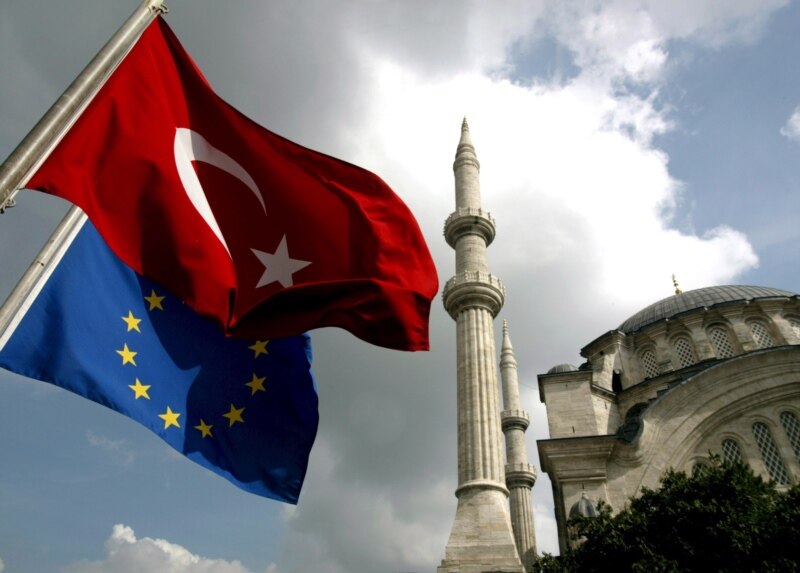
Related Posts:...A dynamic and growing economy, a constitutional revolution expanding democratic rights and an activist foreign policy establishing Turkey as a regional power have imbued Turks with a new self-confidence. But are they turning their backs on the EU?
Much has been made of the purported “neo-Ottomanism” of foreign policy under Ahmet Davutoglu, the new foreign minister, and the new coolness towards Europe of the ruling and neo-Islamist Justice and Development party (AKP) of Recep Tayyip Erdogan the prime minister. On the face of it, Turkey is playing hard to get. Of the 100 trips Mr Davutoglu made in his first year, 46 were in Europe; most of the rest were to the Middle East and neighbouring countries. “AKP people feel more comfortable in Damascus than Rome”, says Hakan Yilmaz of Bosphorus University. “The new elites want the best of both worlds.”
There are a number of reasons for the turn eastwards, none of them to do with the re-creation of empire. During the cold war, Turkey’s role within Nato was to guard the eastern marches. On its end, the Balkans, central Asia and the Caucasus, and the broader Middle East reopened as a natural region of influence for Turkey. This is being driven by interests more than ideology. Turkey has also just opened more than 30 new embassies in Africa and Latin America. Aircraft from Istanbul to all points of Asia are full. This is not the return of the Ottomans but a commercial comeback – timed to pick up the slack from recession in the EU.
Turkey sees itself as a regional power as well, and is determined to show the EU two things: that it has options and, unlike the EU, it knows how to deploy “soft power” in Europe’s Middle Eastern backyard. In short, that it is an asset. ...
The EU’s freeze on all but four chapters of the accession talks, and the open hostility towards Turkey-in-Europe of some member states – Germany and France think it is too big, too poor and too Muslim to absorb – rankles. “How do you want me to convince my party when [Chancellor Angela] Merkel and [President Nicolas] Sarkozy keep telling me I don’t belong,” Mr Erdogan keeps complaining, according to Marc Pierini, the EU’s ambassador to Ankara. There are barbs aplenty, especially for Mr Sarkozy. “We understand his problem, he doesn’t want another rival, another UK, as it were, inside the EU,” says Selim Yenel, undersecretary at the foreign ministry.
Yet all sides recognise there are things happening in Turkey that would not if there were no accession process – from the deepening of democracy to a transformation of industry that is now a key component of Europe’s competitiveness. The European Investment Bank has tripled its investment in Turkish infrastructure and development to €2.7bn ($3.3bn, £2.3bn) a year. There are 12,600 EU companies in Turkey, 4,000 of them German, including Mercedes and Renault, Airbus and Siemens. “The Turkey that will have completed accession negotiations will be greatly different to the Turkey of today, just as today it has been transformed from the Turkey of 10 years ago,” says Abdullah Gul, Turkey’s president.
Turkey is being transformed, the president says, and he acknowledges that the drive for EU membership “has been the dynamo that drives the reform process”. But, he asks, “Does [the EU] have a strategic outlook? Can it plan 50 years ahead and think of its grandchildren?” A good question.
Thursday, May 13, 2010
Are Brazil and Turkey Simply Buying Time for Iran?

On the announcement of the joint Brazilian-Turkish proposal, rumored to involve a nuclear swap along the Turkish-Iranian border, the WP writes:
Iran said Tuesday that Brazil and Turkey have offered a promising new proposal for a nuclear fuel deal as Tehran steps up a diplomatic push to stave off new U.N. sanctions over its disputed nuclear program.
...
The call for sanctions stepped up after Iran last year rejected a U.N.-backed plan that offered nuclear fuel rods to a Tehran reactor in exchange for Iran's stock of lower-level enriched uranium. The swap would have curbed Iran's capacity to make a nuclear bomb.
Under the U.N. proposal, Iran was to send 2,420 pounds (1,100 kilograms) of low-enriched uranium abroad, where it would be further enriched to 20 percent and converted into fuel rods. The rods, which are needed to power a research reactor, would then be returned to Iran. Sending its low-enriched uranium abroad would leave Iran with insufficient stocks to enrich further to weapons-grade level.
Iran, which denies any plan for making nuclear arms, has made several alternate proposals to the West, including one to swap smaller batches of Iran's low-enriched uranium.
But the U.S. and its allies say the proposals obviate the goal of rendering Iran unable to build a nuclear-powered warhead.
In addition to having rejected previous offers presented by the Security Council's five permanent members (plus Germany) in favor of counter-proposals which would have allowed it to continue working towards weapons-grade enrichment, the Iranian regime has stepped up efforts to speed up its enrichment processes, from the WP:
Iran is poised to make a significant leap in its ability to enrich uranium, with more sophisticated centrifuge technology that is being assembled in secret to advance the country's nuclear efforts, according to U.S. and European intelligence officials and diplomats.
...
U.N. nuclear monitors have not been allowed to examine the new centrifuge, which Iranian officials briefly put on display at a news conference last month. But an expert group's analysis of the machine -- based on photos -- suggests that it could be up to five times as productive as the balky centrifuges Iran currently uses to enrich uranium.
...
Using its existing centrifuges, Iran has made more than two tons of low-enriched uranium, an amount that officials say could be further enriched to produce enough weapons-grade material for a single nuclear bomb, even as the government insists that its nuclear program is exclusively for energy production.
...
One of the known plants, a small, heavily fortified facility built in a mountain tunnel near the city of Qom, has been all but idle in recent months. Construction has slowed to a near halt in the weeks since the facility was publicly revealed in September, according to two Europe-based diplomats privy to intelligence reports about the site.
"They seem to have lost interest in Qom since its discovery," said the diplomat, who, like others, spoke on the condition of anonymity to discuss sensitive intelligence about Iran's nuclear program. "It makes us wonder if they're thinking about a new site."
...
Iran's largest enrichment facility, an underground complex near the city of Natanz, also appears to have stalled. Originally built to house 50,000 first-generation centrifuges known as IR1s, Natanz had only about 3,800 functioning machines when U.N. inspectors visited in late January, compared with nearly 5,000 working IR1s the previous spring.
In uranium enrichment, centrifuges spin a gasified form of uranium at supersonic speeds to create the enriched fuel used in commercial nuclear power plants, as well as in nuclear weapons.
The IR1 centrifuge used at Natanz is based on a 1950s Dutch design that Pakistani scientist Abdul Qadeer Khan stole and sold to the Iranians. The machine is prone to crashing, and it was quickly abandoned by other countries that used it.
The new machine displayed by Iran leaps ahead by at least two generations, according to diplomatic sources and nuclear experts. One diplomat said the machine on display was "probably an IR5," adding that the U.N. officials do not know how Iran developed the centrifuge or who might have provided assistance.
...
Iran has a limited amount of natural uranium, but it has produced uranium hexafluoride, the feedstock for centrifuges, to keep them running for years.
Ali Akbar Salehi, Iran's nuclear energy chief, was vague when asked during a CBS interview about new facilities. "We may start -- we probably will start -- another site this year," Salehi said. He added that Iran does not intend to notify the U.N. nuclear agency about the new construction until the facility is nearly ready for operation.
After being embarrassed publicly by revelations about the secret Qom plant, President Mahmoud Ahmadinejad boasted that Iran would soon build 10 enrichment facilities.
Commenting on possible motivations and perspectives in Turkey Sinan Ulgen writes in FP:
...In short, Turkey shares much of the same concerns about a nuclear Iran as its partners in the West. The difference stems from the envisaged strategy for addressing the Iranian issue. Turkish policymakers want and continue to believe that a diplomatic solution is possible. Turkish Foreign Minister Ahmet Davutoglu has been in direct talks with his Iranian counterpart to seal a deal allowing the transfer of nuclear fuel to Iran. As such, Ankara is against the imposition of new sanctions on Iran. These differences are likely to lead Turkey to abstain from voting for such a U.N. Security Council resolution, now slated for early June. U.S. policymakers are known to have made clear to their Turkish counterparts that abstention will be viewed by Washington as Turkey's failure to support the new sanctions. After all, unlike other recalcitrant states like China and Brazil, Turkey is a NATO ally and benefits from the U.S nuclear umbrella; it is therefore expected to support the emerging consensus among NATO members regarding sanctions on Iran.
The growing pressure on Ankara to align itself with members of the transatlantic community is closely linked to the ineptitude of Turkish leaders, and in particular of Prime Minister Recep Tayyip Erdogan, to explain the rationale for Turkey's opposition to a new set of sanctions against Iran.
In an interview with the Guardian newspaper, the Turkish prime minister dismissed accusations that Tehran wants to develop nuclear weapons as simple rumors. Indeed, every time the nuclear issue is raised, Erdogan is quick to point his finger to Israel and its nuclear weapons so as to denounce the apparent double standard of the international community. As a result, Turkey's preference for a different strategy for dealing with Iran, involving more diplomacy and less sanctions, comes across as a provocative ideological choice, fueling fears in some quarters that Turkey is moving away from the West....
On arguments Turkey could present in opposition to the new round of sactions, Ulgen writes:
...Trade and investment sanctions, as experienced in relation to Iraq, have the potential to hurt Turkey and the Turkish economy. The impact will be felt all the more in Turkish provinces near Iran, which are among the poorest in Turkey. As a neighbor of Iran, Turkey is in a different position compared with the other members of the U.N. Security Council with a bilateral trade volume in excess of $10 billion;...
Meanwhile, also writing in FP, Paulo Sotero explores Brazilians' reactions to their president's foray into the Iranian question:
... Lula's administration has pitched the talks to Iran not as a way to come clean but as a way to prove that it is hiding nothing with its peaceful nuclear program -- and the United States and Europe are understandably skeptical. Back home, questions have arisen about the Brazilian leader's motivation for injecting himself and his country in such a daring initiative in the first place.
... As his presidential term comes to an end, Lula's move might be more about building a legacy on the world stage than much of anything else. And it may well backfire.
... Iranian President Mahmoud Ahmadinejad's visit to Brasilia last November was greeted with street protests and strong condemnation by the media and Lula's political opponents. José Serra, then São Paulo's governor and now a leading presidential candidate, criticized the president for embracing a dictator reminiscent of the military regime Lula and Serra -- themselves victims of political persecution -- fought to dislodge from power a quarter-century ago.
... The image of a smiling Brazilian minister of commerce offering the national soccer team's revered yellow jersey to Ahmadinejad in Tehran last month caused discomfort even among Lula's allies. Clovis Rossi, a columnist and early supporter of Lula's foreign policy, wrote that the Brazilian soccer jersey is now "covered with blood" from Iranian dissidents killed by the Islamic government.
...
Lula, however, remains undaunted by criticism, which he views as uninformed and undeserved attacks from those too blind to see that he is shepherding Brazil's emergence as a global power. ...
"Call us naive, but I think those who believe in everything the U.S. intelligence service says are much more naive. Look at the case of Iraq," Amorim said in an interview with the AFP. ...
Iran might have liked that rhetoric, but it's far from clear that Tehran will do much more to deliver on its "in principle" agreement for talks. The country has rejected similar deals in the recent past after welcoming them "in principle." U.S. Secretary of State Hillary Clinton dismissed Brazil and Turkey's efforts, accusing Tehran of stalling and trying to gain time instead of addressing the central question about the nature of its nuclear program at the IAEA.
...
U.S. and European officials have already signaled to their Brazilian counterparts that a Lula visit to Tehran that fails to produce results could cause major damage to Brazil's relations with its traditional allies. Fearful of this outcome, which he sees as inevitable, former Foreign Minister Luis Felipe Lampreia warned in an op-ed for O Globo that the upcoming visit "will cause incalculable material and political losses" and could raise suspicions about Brazil's own nuclear program -- all in pursuit of a "completely unnecessary" initiative. Added Lampreia, "It is like the person who crosses the street on purpose to step on a banana peel on the opposite sidewalk." Lula is about to test out the wisdom of that approach.
Wednesday, May 12, 2010
Turkey-Syria Relations Progressing

Related Posts:.Every Friday, tour buses pull up outside the Sanko Park shopping centre in Gaziantep, an industrial city near Turkey’s southern border with Syria....They are Syrians coming from Aleppo – just a few hours drive over the border – to snap up electronic goods and shop in fashion chains, from Mango to Marks & Spencer, that are unavailable at home. They now make up about one in 20 of the 850,000 customers each month, spending an average of $120 a head and prompting the mall to open an office that will refund VAT on the spot.
“Syria is Turkey 20 years ago,” says Emin Berk, who runs a new office to encourage small business dealings between Gaziantep and Aleppo. “Gaziantep is the first stop out of Syria: it’s more developed and it has better shopping.”
The cross-border spending sprees are one of the most visible effects of a recent rapprochement between Turkey and Syria, part of Ankara’s drive to strengthen ties with its eastern neighbours, using trade and cultural links to increase its “soft power” in the Middle East.
The two countries scrapped visa requirements last autumn to seal their friendship – a striking reversal of the tension of earlier decades, when Turkey was suspected of planting bombs in Damascus in retaliation for Syria’s sheltering of Kurdish separatists. Landmines still pepper the border that tourists now cross freely, but the new allies are even holding joint military exercises.
Nor is Turkey’s aim purely diplomatic. Officials hope their country’s exporters will tap fresh markets, and create jobs in the poorest south-eastern regions of the country – where unemployment and poverty fuel a sense of grievance among ethnic Kurds, and government subsidies have so far had little effect in attracting investment....Gaziantep itself is a prospering manufacturing centre, but it has struggled to absorb an influx of Kurdish jobseekers from further east, especially during last year’s recession.
The growing trade with Syria and Iraq, in particular, helped counter the slump in European markets. Turkey’s exports to those two countries rose by 30 per cent last year compared with 2008.
Cement is one of the most profitable products, Mr Berk says, with a 50kg bag selling for $50 in Turkey, but $140 in Syria. Sanko, the biggest local conglomerate, is building a packing plant next to the border to cut transport costs for its cement. Other exports range from carpet yarn to nappies and machinery for processing lentils.
There are still barriers to trade: Mr Berk says high taxes make it difficult for Turkish businesses to sell finished textiles or foodstuffs in Syria.
Furthermore, scrapping visas has brought other benefits. Gaziantep’s private hospitals are drawing health tourists, and its airport is busier as Syrians drive across the frontier to catch cheaper flights to Europe....
Monday, May 10, 2010
Turkey-Syria-Qatar

Turkey's Prime Minster Recep Tayyip Erdogan (R) welcomes Qatar's Emir Sheikh Hamad bin Khalifa al-Thani (L) and Syria's President Bashar al-Assad before their meeting in Istanbul, May 9, 2010. (Reuters Pictures via Daylife)
Subscribe to:
Posts (Atom)